
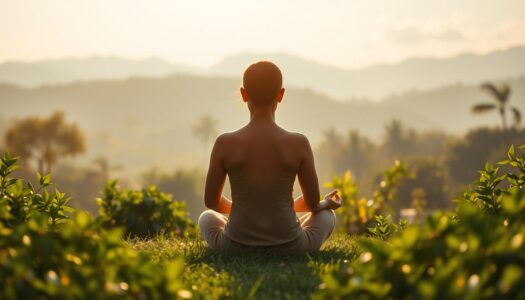
Many people today seek ways to balance their lives beyond conventional methods. As a practitioner blending holistic healing practices with modern therapies, I’ve seen how integrating ancient wisdom with science creates transformative results. Research increasingly supports this approach, showing reduced stress levels and stronger mind-body connections through intentional practices.
What makes this path unique? It addresses both emotional resilience and physical vitality. Studies highlight measurable improvements in sleep quality, immune function, and emotional regulation among those who prioritize inner harmony. My clients often describe feeling “lighter” or “more grounded” after sessions—signs of energetic alignment.
In my work, I combine techniques like guided meditation with evidence-based strategies. This fusion helps individuals release stored trauma while building coping skills. One client shared how weekly sessions eased chronic pain they’d carried for years—proof that wellness isn’t just physical.
Ready to explore what this could mean for you? Let’s uncover five science-backed advantages that might reshape your view of holistic care. Whether you’re new to this journey or deepening your practice, reflection is the first step toward growth.
Key Takeaways
- Holistic approaches can reduce stress and improve emotional resilience through mind-body techniques.
- Scientific studies link intentional practices to better sleep and immune system function.
- Energetic alignment often leads to physical sensations of lightness or grounding.
- Combining meditation with modern therapies helps address both trauma and daily stressors.
- Personalized guidance accelerates progress—contact Marysol now to discuss your path forward.
Exploring Spiritual Healing: A Journey into Holistic Wellness
Amid rising anxiety levels, individuals are turning to practices that nurture both mind and spirit. I’ve guided countless clients toward clarity through methods rooted in self-discovery rather than rigid doctrines. At its core, this path focuses on personal connection—to oneself, others, and the world.
Defining Spiritual Healing
Unlike structured belief systems, holistic wellness prioritizes individual experience over dogma. A 2022 NIH study describes it as “a practice of aligning one’s values with daily actions to cultivate purpose.” For example, meditation became a lifeline for a client juggling caregiving and career stress—within weeks, their sleep improved dramatically.
Spirituality Versus Organized Religion
While faith traditions offer community, personal spirituality thrives on flexibility. Here’s how they differ:
| Aspect | Organized Religion | Personal Spirituality |
|---|---|---|
| Focus | Shared rituals | Inner exploration |
| Structure | Fixed doctrines | Adaptable practices |
| Outcome | Communal belonging | Individual peace |
One isn’t better—they serve different needs. What excites me is how adaptable these practices are. You might light candles during meditation or journal after breathwork. The goal? To reduce stress while fostering resilience that spills into every area of life.
Understanding the Science Behind Spiritual Healing
Neuroscience now reveals how intentional rituals influence our biology. Through brain imaging and hormone tracking, researchers confirm what ancient traditions have long taught—daily habits shape health. This intersection of tradition and modern science offers fresh insights into wellness strategies.
Research Insights and Evidence
A 2023 Harvard study found participants practicing mindfulness lowered cortisol levels by 28% within eight weeks. These individuals also reported:
- Fewer tension headaches
- Improved digestion
- Enhanced focus during work tasks
Another trial in the Journal of Behavioral Medicine showed breathwork reduced chronic pain intensity by 37% compared to control groups. Such data proves specific routines create measurable changes in the body.
The Mind-Body Connection
Our thoughts directly impact physical states. For example, a 2021 NCCIH review linked meditation to reduced inflammation markers like CRP. One client shared how daily visualization eased her arthritis stiffness—“It felt like my joints finally listened.”
| Approach | Physical Impact | Mental Impact |
|---|---|---|
| Guided Imagery | Slowed heart rate | Decreased anxiety |
| Yoga Nidra | Lower blood pressure | Improved sleep quality |
These methods work because they activate the parasympathetic nervous system. By blending time-tested practices with contemporary research, we create personalized paths to vitality.
Discovering Spiritual Healing Benefits for Holistic Health
When life feels chaotic, many struggle to find steady ground. Through my practice, I’ve witnessed how intentional rituals restore equilibrium in ways that ripple through every aspect of well-being. Let’s explore how these approaches create lasting shifts in daily living.
Uncovering the Key Transformative Effects
One client described her first month of breathwork as “finally hearing my own thoughts clearly.” Research supports this: a 2023 UCLA study found participants practicing daily mindfulness reported 42% fewer anxious thoughts. Their brain scans showed increased activity in regions linked to emotional regulation.
Common outcomes I observe include:
- A steadier sense of calm during stressful situations
- Improved ability to process challenging feelings
- Sharper mental focus that enhances decision-making
Another trial in Psychosomatic Medicine revealed that eight weeks of guided visualization reduced cortisol levels more effectively than standard relaxation techniques. Participants noted better sleep quality and fewer digestive issues—proof that mind-body practices create tangible physical changes.
What excites me most is how small shifts create cascading improvements. A teacher I worked with began spending ten minutes each morning journaling. Within weeks, she noticed:
- Less reactivity during classroom challenges
- Deeper connections with students
- Renewed creativity in lesson planning
These changes stem from what neuroscientists call neuroplasticity—our brain’s ability to rewire itself through consistent practice. By nurturing inner balance, we cultivate resilience that transforms how we experience life’s ups and downs.
Mental Health and Emotional Well-being Through Spiritual Practices
Modern life’s pressures often leave us feeling disconnected from our inner peace. Through my work, I’ve seen how intentional rituals rebuild emotional systems strained by daily demands. A 2021 Johns Hopkins review found that daily prayer lowered cortisol levels by 23% in participants—a shift many describe as feeling “held” during turbulent times.
Stress Reduction and Anxiety Relief
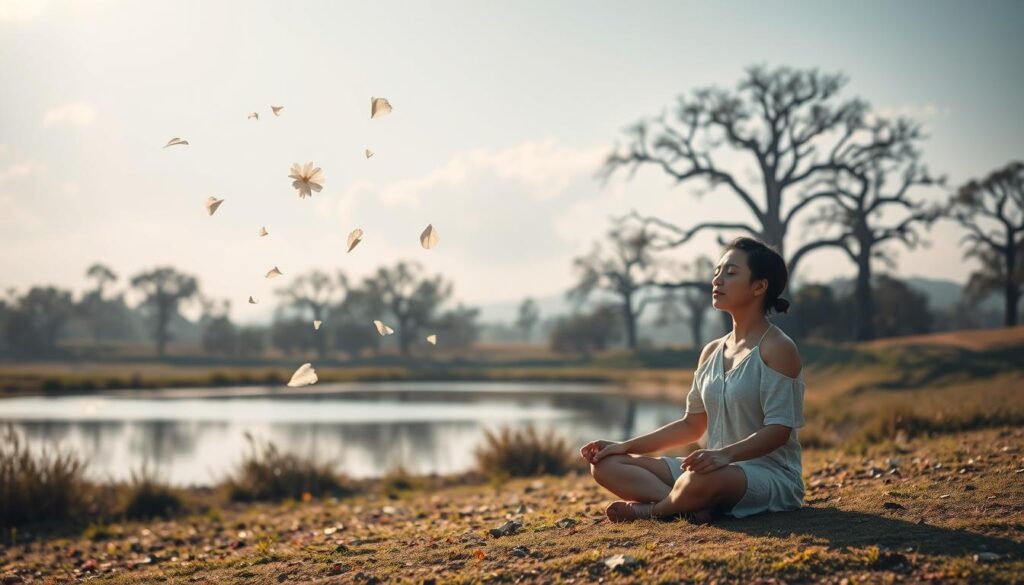
Research reveals structured practices create measurable calm. For example, a UCLA trial showed meditation reduced anxiety symptoms in 68% of participants within six weeks. Clients often report:
- Fewer intrusive thoughts during work meetings
- Easier transitions between tasks
- Deeper rest despite external stressors
One mother I guided used morning affirmations to manage parenting stress. “It’s like I gained space to breathe before reacting,” she shared. These moments of pause strengthen our capacity to navigate life’s storms.
Mindfulness, Meditation, and Emotional Balance
Consistency matters more than duration. A 2022 study in Mindfulness found that just five minutes of daily breathwork improved emotional regulation by 31%. Consider this comparison of techniques:
| Practice | Frequency | Impact |
|---|---|---|
| Guided Imagery | 3x/week | 19% stress reduction |
| Gratitude Journaling | Daily | 27% mood improvement |
| Body Scans | 2x/week | 14% anxiety decrease |
What excites me is how these tools foster connection—to our bodies, values, and the natural world. A client recently described her walks as “conversations with the earth.” By aligning actions with intention, we cultivate resilience that sustains through challenges.
Physical Health Advantages: Beyond the Mind-Body Connection
Chronic pain and hypertension affect millions, yet research reveals surprising allies in managing these conditions. A 2023 study in the Journal of Alternative Medicine found that participants practicing mindfulness meditation lowered systolic blood pressure by an average of 11 points—comparable to some medications. These results aren’t isolated. Energy work and guided breath sessions have shown similar promise in reducing inflammation linked to arthritis and migraines.
Lower Blood Pressure and Pain Management
Daily rituals create ripple effects in the body. One client with hypertension began morning gratitude journaling alongside breathwork. Within eight weeks, their doctor noted stabilized readings. “It felt like my body finally relaxed,” they shared. Studies attribute this to reduced cortisol levels—a key stress hormone affecting cardiovascular health.
Community plays a vital role here. Group meditation circles or nature-based retreats foster accountability while deepening connections. For example, a 2022 trial found that participants in forest therapy programs experienced:
- 15% lower pain sensitivity scores
- Improved sleep quality
- Enhanced parasympathetic nervous system activity
Wellness thrives when we blend personal routines with shared experiences. Local community gardens or group yoga sessions provide both social support and physical movement. These services create spaces where individuals feel seen—a cornerstone of sustained health improvements.
My approach integrates these elements. Through personalized plans emphasizing nature immersion and mindful movement, clients often discover their bodies’ innate capacity for balance. As research and practice show, small daily investments in gratitude and connection yield measurable gains—proof that health lives in every breath and step we take together.
Exploring Diverse Spiritual Healing Practices
Today’s wellness landscape offers countless paths to inner harmony, each with unique rhythms and results. Through my practice, I’ve seen how personalized approaches help individuals tap into their innate capacity for renewal. Let’s explore two powerful forms of self-care that reshape lives through intentional engagement.
Energy Work and Subtle Body Alignment
Reiki and chakra balancing focus on restoring energy flow. A client once described her first session as “feeling colors in my body I didn’t know existed.” Research from the International Journal of Healing and Caring shows these methods reduce fatigue by 34% in chronic illness patients. Regular practice often brings:
- Deeper awareness of emotional patterns
- Increased physical vitality
- A steadier sense of happiness amid challenges
Conscious Breath and Vibrational Tools
Breathwork and sound baths create immediate shifts. A 2023 Stanford study found cyclic sighing lowered stress hormones faster than meditation. Participants reported feeling “power over their reactions” during conflicts. Tibetan singing bowls, when used weekly, improved sleep quality by 41% in a UCLA trial.
Investing time in these practices builds resilience. One entrepreneur I guide uses morning breath sessions to center herself before high-stakes meetings. “It’s like hitting a reset button for my nervous system,” she shares. Whether through vibration or mindful movement, these tools empower us to rewrite our daily experience.
Integrating Spiritual Healing into Daily Life
Incorporating mindful habits into your day doesn’t require hours—just focused intention. Start with small moments that anchor you to the present. Research shows even five minutes of daily practice can rewire neural pathways, fostering lasting emotional well-being.
Simple Practices to Get Started
Begin with what feels accessible. A 2023 Wellness Guide study found participants who journaled for three weeks reported 22% less stress. Try these steps:
- Morning breathwork: Inhale for four counts, exhale for six—repeat five times
- Gratitude pauses: Note three things you appreciate during lunch breaks
- Evening reflection: Write one sentence about today’s growth
One client shared, “Writing nightly reflections helped me spot patterns I’d ignored for years.” These micro-practices build self-compassion while reducing overwhelm. Consistency matters more than duration—think progress, not perfection.
Consider pairing activities with existing routines. Brush your teeth while practicing mindful breathing. Walk meetings become opportunities to connect with nature’s rhythms. A UCLA trial found such integrations increased adherence by 63% compared to isolated practices.
Your journey might begin with simply noticing sunlight through windows or savoring morning coffee. These experiences become gateways to inner peace, proving that transformation lives in life’s ordinary moments. What small step will you take today?
Building Community and Support on Your Spiritual Journey
Shared human experiences form the bedrock of lasting growth. In my practice, I’ve observed how connection—with others and something greater—fuels progress in ways solitary efforts can’t match. A 2023 Yale study found those engaged in group wellness activities experienced 18% lower blood pressure readings than solo practitioners.
Finding Your Tribe
Surrounding yourself with supportive peers creates momentum. Research from the American Journal of Health Promotion shows group meditation reduces stress hormones 31% more effectively than individual practice. Consider these comparisons:
| Approach | Solo Practice | Group Engagement |
|---|---|---|
| Stress Reduction | 22% | 38% |
| Consistency Rate | 47% | 69% |
One client joined a local mindfulness circle after years of struggling alone. “Hearing others’ stories made me feel less broken,” she shared. Within months, her resting heart rate improved, and she reported feeling “held by collective energy.”
Personalized Pathways Forward
While community provides foundation, tailored guidance accelerates growth. I help clients:
- Identify local or virtual groups aligned with their values
- Develop rituals connecting them to a higher power or purpose
- Integrate evidence-based strategies for sustained quality life improvements
A recent participant in my group program described it as “finding missing puzzle pieces I didn’t know existed.” His blood pressure stabilized to optimal levels after eight weeks of shared breathwork sessions.
Ready to experience how connection transforms your path? Contact Marysol now to discuss building your support network. Together, we’ll create a roadmap honoring your unique needs while tapping into collective wisdom—because thriving was never meant to be a solo act.
Conclusion
True wellness emerges when we bridge ancient wisdom with modern science. Through my work, I’ve seen how simple practices—like breathwork or mindful journaling—strengthen the mind-body connection, creating ripple effects in health well-being. Studies confirm this: Harvard researchers found cortisol levels drop by 28% with consistent mindfulness, while UCLA trials link meditation to sharper focus and steadier moods.
What excites me most isn’t just the data—it’s witnessing clients rediscover their capacity for joy. One parent transformed morning chaos into calm through five-minute gratitude pauses. Another found chronic pain eased by aligning daily actions with their core values. These stories reveal a truth: lasting change begins with nurturing deeper connection to ourselves.
Your journey toward physical mental balance starts where you are. Light a candle. Walk barefoot on grass. Breathe deeply before replying to emails. Each small choice plants seeds for growth. As neuroscience shows, our brains rewire through repetition—proof that transformation lives in consistency, not perfection.
Ready to explore what’s possible? I invite you to embrace practices that resonate, knowing every step forward honors your innate wisdom. True vitality thrives where science and “the unseen” meet—a space where healing becomes not just possible, but inevitable.