
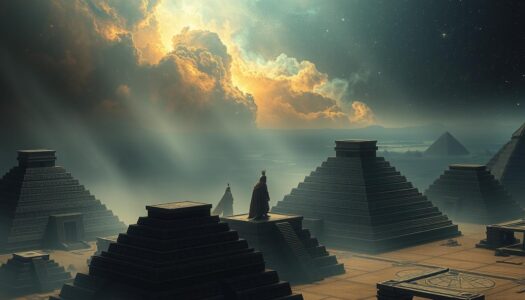
I find the Anunnaki to be a fascinating topic, shrouded in mystery and intrigue. As I explore their history and significance, I am drawn into a world of ancient myths and legends.
The Anunnaki, as depicted in Mesopotamian texts, were a group of powerful deities with various roles and functions. Their stories have been passed down through the ages, influencing cultures and sparking debates.
If you’d like to discuss your personal experiences or have questions, please speak to Marysol. In this article, I will explore the theories, texts, and possible truths surrounding the Anunnaki.
Key Takeaways
- The Anunnaki are a group of deities in ancient Mesopotamian pantheon.
- Their name means “princely seed” or “offspring of An” in Sumerian.
- The Anunnaki were mentioned in Sumerian, Akkadian, Assyrian, and Babylonian texts.
- Their stories have influenced cultures and sparked debates.
- The Anunnaki continue to be a topic of interest today.
The Origins of the Anunnaki in Ancient Mesopotamian Texts
Exploring ancient Mesopotamian texts, I find the origins of the Anunnaki. The Sumerian and Akkadian civilizations shared much about these enigmatic beings.
Sumerian and Akkadian References
The Anunnaki appear in Sumerian and Akkadian texts like the Epic of Gilgamesh and Enuma Elish. These writings give us a glimpse into their roles and importance in ancient societies.
Key Cuneiform Tablets and Inscriptions
Important cuneiform tablets, like the Weld-Blundell Prism, and inscriptions on monuments hold valuable Anunnaki information.
Translations and Interpretations
Translations of these ancient texts show the rich mythology of the Anunnaki. They reveal the Anunnaki’s part in cosmic events and human lives.
| Text | Description | Significance |
|---|---|---|
| Epic of Gilgamesh | Narrates the adventures of Gilgamesh and his interactions with the Anunnaki | Highlights the Anunnaki’s role in human destiny |
| Enuma Elish | Describes the creation myth involving the Anunnaki | Illustrates the Anunnaki’s celestial origins |
The Anunnaki in the Epic of Gilgamesh and Other Texts
The Epic of Gilgamesh offers deep insights into the Anunnaki. It shows their hierarchy and their part in human stories.
Roles and Descriptions in Ancient Narratives
The Anunnaki are seen as mighty gods linked to the sky and earth’s wonders.
Hierarchy Among the Anunnaki
A clear order exists among the Anunnaki. Some are more powerful and significant than others.
Who Were the Anunnaki? Mainstream Historical Interpretations
The Anunnaki are a key part of ancient Mesopotamian mythology. Historians see them as important gods and goddesses. They are linked to nature and human life.
The Anunnaki as Mesopotamian Deities
In ancient Mesopotamia, the Anunnaki were gods and goddesses. Their importance grew over time. They share myths and deities with other ancient cultures.
Connection to Other Pantheons
The Anunnaki were not alone in their mythological world. They were part of a network of gods and goddesses in the ancient Near East. This is seen in the similarities with other ancient mythologies.
Evolution of Anunnaki Worship
The worship of the Anunnaki changed over time. This was due to cultural, political, and religious shifts in Mesopotamia. Their roles and importance in mythology also evolved.
Cultural Significance in Ancient Civilizations
The Anunnaki were deeply important in ancient Mesopotamian cultures, like the Babylonians and Assyrians. Their influence went beyond Mesopotamia, shaping the ancient world’s myths and culture.
Influence on Babylonian and Assyrian Cultures
The Anunnaki were highly respected in Babylonian and Assyrian cultures. Their myths influenced these cultures’ religions and traditions. Archaeological evidence shows their importance in these societies.
Archaeological Evidence
Archaeological discoveries, like cuneiform tablets, offer insights into the Anunnaki. These finds highlight their cultural role in ancient Mesopotamia.
Alternative Theories About the Anunnaki
Exploring alternative theories about the Anunnaki leads to a world of debate and speculation. These ideas challenge traditional views, providing new insights into who the Anunnaki were and where they came from.
Zecharia Sitchin’s Ancient Astronaut Theory
Zecharia Sitchin’s theory is a key alternative view. He believed the Anunnaki were aliens who visited Earth long ago. Sitchin’s work has sparked both interest and controversy among scholars and fans.
The 12th Planet and Nibiru Claims
Sitchin thought the Anunnaki came from a 12th planet called Nibiru. This idea has fascinated many, but scientists have raised many doubts about it.
Critiques from Scholars and Linguists
Scholars and linguists have questioned Sitchin’s views. They point out errors and misinterpretations in ancient texts. Understanding these criticisms helps us see the Anunnaki more clearly.
Scientific and Archaeological Perspectives
From a scientific and archaeological view, the Anunnaki are intriguing. Ongoing research is uncovering more about their role in ancient Mesopotamian cultures.
Modern Research Findings
New studies have shed light on the Anunnaki’s cultural and religious importance. They show how these beings were seen in ancient myths and daily life.
Distinguishing Between Fact and Speculation
It’s important to separate fact from fiction when looking at the Anunnaki. This helps us understand their true place in history and mythology.
Conclusion: Separating Myth from Possible Truth
Exploring the Anunnaki has deepened my understanding of their complex nature. They are a topic of fascination and debate. Many theories and interpretations surround their origins and role in alien species history.
Looking at the historical and cultural contexts of the Anunnaki, I’ve tried to separate myth from truth. If you’re interested in learning more about these ancient deities, or if you have personal experiences, I encourage you to reach out. Experts like Marysol can offer guidance and support.
The mystery of who the Anunnaki were continues to intrigue us. It inspires a journey of discovery that combines spiritual wisdom with historical insight. As we learn more about these enigmatic beings, we may gain new perspectives on our world and our place in it.